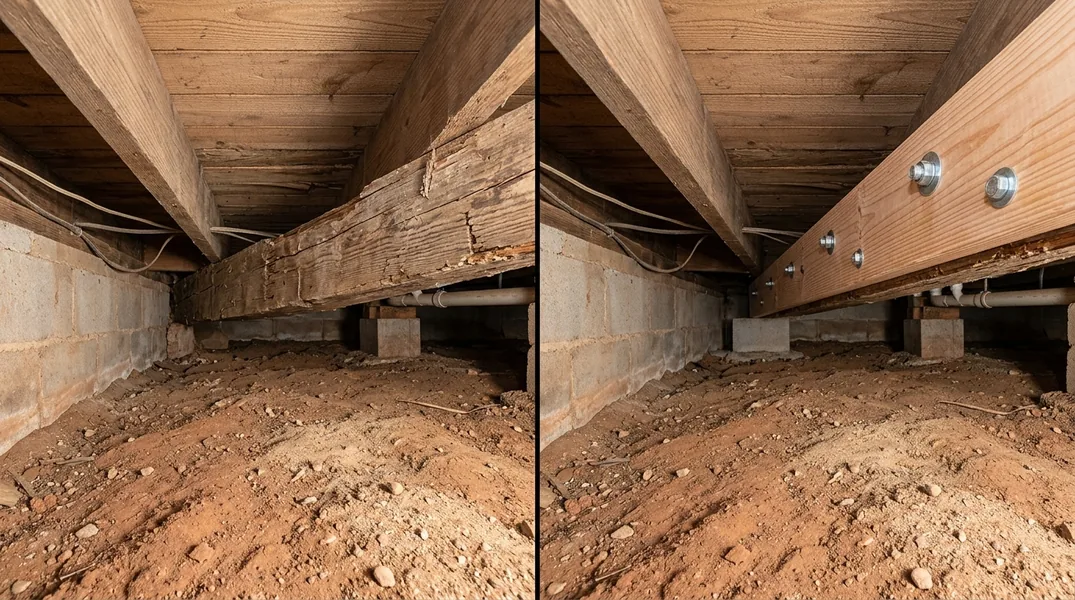
Why Are Your Floors Sagging? The Oklahoma City Clay Soil Connection
If you own an older home in Oklahoma City, there's a good chance you've noticed your floors aren't quite level anymore. That subtle slope or bounce underfoot isn't just annoying, it's often a warning sign that something structural needs attention. The culprit? A combination of aging wood and Oklahoma's notoriously expansive clay soil.
Oklahoma City sits atop clay-heavy soil that swells when wet and shrinks when dry. This constant expansion and contraction puts enormous pressure on foundation posts and support beams. Over decades, this movement weakens the structural integrity of floor joists, causing them to sag, crack, or fail. Add in the natural deterioration that comes with age, moisture exposure, and sometimes wood rot or termite damage, and sagging floors become nearly inevitable in homes built before the 1980s.
The problem isn't always immediately dangerous, but it's never something to ignore. A sagging floor indicates that your home's support system is compromised. The longer you wait, the more stress is transferred to other structural components, potentially leading to more expensive repairs down the road.
Common Causes of Sagging Floors in Older Homes
Understanding why your floor is sagging is the first step toward fixing it. In older Oklahoma City homes, sagging typically results from one or more of these factors working together. Weak or undersized floor joists are a primary culprit, especially in homes built in the early-to-mid 20th century when building codes were less stringent. These joists simply weren't engineered to handle the loads we place on modern homes, or they've weakened over time due to repeated stress and moisture exposure.
Wood Rot & Dry Rot Repair is often necessary because moisture infiltration causes the wood to lose structural strength. Basements and crawl spaces that aren't properly ventilated create the perfect environment for rot to develop silently for years. Similarly, Termite Damage Repair addresses another common culprit. Termites can hollow out floor joists from the inside, leaving them looking solid on the surface but structurally useless underneath.
Foundation settlement is another major factor. As soil shifts beneath your home, support posts and beams settle unevenly, causing the floor system to lose its level. In some cases, the central beam or girder that carries the load of the entire first floor develops cracks or bends under the weight, which then transfers the problem directly to the floors above.
Sagging Floor Repair Options: From Sistering to Full Replacement
Once you've identified that your floor is sagging, you have several repair options. The right choice depends on the severity of the damage, which joists are affected, and your budget. A professional inspection is always the first step, as it reveals exactly which joists are compromised and whether the underlying foundation is stable.
For moderately weakened joists, sistering is often the most cost-effective solution. This process involves fastening a new piece of lumber (called a sister joist) alongside the damaged or weak original joist. The two pieces work together to carry the load, effectively doubling the structural capacity of that section. Sistering is ideal when the joist itself is still largely intact but has lost some strength due to age or minor rot. Floor Joist & Subfloor Repair specialists can assess whether sistering will work for your situation or if more extensive work is needed.
When joists are severely rotted, cracked, or have been compromised by termites, full joist replacement becomes necessary. This involves removing the damaged joist and installing a new one in its place. In some cases, multiple joists may need replacement if the damage is widespread. For homes where the central support beam itself has failed or is severely compromised, Beam Replacement & Load-Bearing Wall Removal may be required, which is a more involved and expensive undertaking.
Another consideration is whether the subfloor needs repair or replacement. If the subfloor has rotted or been damaged by moisture, it must be replaced to ensure the flooring above sits on a solid, level surface. Some homeowners also choose to address foundation settlement by installing additional support posts or adjustable jack posts, which can help lift the floor back to level and prevent future sagging.
Sagging Floor Repair Cost in Oklahoma City: What to Budget
The pricing for sagging floor repair varies widely depending on the scope of work. A simple sistering job on one or two joists might cost between $1,500 and $3,500, while a full joist replacement can run $3,000 to $8,000 per joist. If multiple joists need attention, costs multiply quickly. Beam replacement is significantly more expensive, often ranging from $5,000 to $15,000 or more, depending on the beam's length and the complexity of the installation.
Several factors influence the final cost. The accessibility of the damaged joists matters tremendously. If your crawl space is tight and cramped, or if the joists are buried under layers of old flooring and insulation, labor costs increase. The extent of rot or termite damage also affects pricing. If the damage is limited to the joist itself, costs are lower. But if rot has spread to the rim band, band board, or foundation, additional repairs become necessary, driving up the total bill.
The age and condition of your home's foundation also plays a role. If the foundation itself has shifted or settled, you may need to address that before repairing the floor joists, otherwise the problem will simply recur. Additionally, if you're dealing with active termite infestation or ongoing moisture problems, those issues must be resolved before repair work begins, or the new wood will be compromised just as quickly as the old.
To get an accurate estimate for your specific situation, contact Oklahoma City Carpentry at (405) 563-9938 or request a free estimate. A thorough inspection will reveal exactly what needs to be done and what the realistic costs are for your home.
When to Call a Professional: Signs Your Floor Needs Immediate Attention
Not all sagging floors require emergency repair, but some situations demand immediate professional attention. If your floor has sagged noticeably in a short period of time, that's a red flag. A gradual sag over decades is one thing, but sudden movement indicates an acute structural failure. Similarly, if you notice cracks appearing in drywall, doors and windows that no longer close properly, or visible gaps between walls and the floor, these are signs that structural movement is active and accelerating.
Soft spots in the floor, especially in bathrooms or kitchens, suggest that water damage and rot are already well advanced. A floor that bounces or feels spongy underfoot means the joists have lost significant strength. If you can see daylight from the crawl space or smell musty, moldy odors, moisture problems are severe. Any of these conditions warrant a call to a qualified carpenter who can assess the damage and recommend repairs before the problem worsens.
The good news is that sagging floors, while serious, are repairable. The key is catching the problem early and addressing it before secondary damage spreads. If you're in Oklahoma City and concerned about your floors, don't wait. Contact Oklahoma City Carpentry at (405) 563-9938 to schedule an inspection and get a clear picture of what you're dealing with.
Preventing Future Sagging: Maintenance and Moisture Control
Once your floors are repaired, the best investment you can make is preventing the problem from happening again. Moisture control is paramount. Ensure your crawl space has adequate ventilation and consider installing a vapor barrier on the ground to reduce humidity. Keep gutters and downspouts clean and direct water away from the foundation. Any water intrusion into the crawl space or basement should be addressed immediately.
Regular inspections of your crawl space or basement are also important. Look for signs of rot, termites, standing water, or excessive moisture. Catch problems early, and you'll avoid the expensive repairs that come with advanced deterioration. If you notice any new soft spots or additional sagging, address them promptly rather than hoping they'll go away on their own.
Maintaining proper ventilation throughout your home reduces humidity levels that encourage rot and termites. In kitchens and bathrooms, use exhaust fans to remove moisture. Insulate and seal rim bands and band boards to prevent moisture intrusion. These preventive measures are far less expensive than major structural repairs and will extend the life of your home's support system significantly.
Looking for a professional carpentry contractor in Oklahoma City? Oklahoma City Carpentry responds fast for all your carpentry needs.
Get a Free QuoteOur services: Wood Rot & Dry Rot Repair · Termite Damage Repair · Floor Joist & Subfloor Repair